
What Actually Makes a Home Feel Refreshed?

Updated: May 7
There is something about this time of year that makes us want to reset our homes.
Maybe it is the longer days, the shift in routines, the warmer light, or the natural transition from one season into the next. Suddenly, the things that felt cozy a few months ago can start to feel heavy. The corners we have been ignoring feel more noticeable. The spaces that worked well enough through a busy season may begin to feel like they need a little more breathing room.
But a refreshed home does not always require a full renovation, a new furniture plan, or a complete redesign.
Sometimes, the most meaningful changes are smaller and more intentional. They come from editing what is already there, rethinking how a room is functioning, and making subtle shifts that help your home feel lighter, calmer, and more aligned with the season ahead.
At KMCC, we believe a home should not only look beautiful. It should support the way you live. A true refresh is less about chasing what is new and more about creating a space that feels clearer, easier, and more connected to your daily life.


One of the most effective ways to refresh a space is also one of the simplest: remove what no longer needs to be there.
Before buying something new, take a step back and look at what is already in the room. Are there pieces that feel visually heavy? Surfaces that have collected too much? Decor that no longer feels like you? Furniture that interrupts the flow of the space?
Editing does not mean stripping a room of personality. It means giving the right things room to stand out.
A console table with fewer, better objects can feel more intentional. A living room with a simplified pillow mix can feel calmer. A bedroom with cleared nightstands and softer lighting can feel more restful almost immediately.
Often, a home starts to feel refreshed when there is less competing for attention.


When people think about making a home feel lighter, they often think first about paint colors or white walls. Color can absolutely play a role, but lightness is not only visual. It is also about how a room feels to move through, use, and experience.
A space can feel lighter because the furniture layout allows for better flow. It can feel lighter because window treatments let in more natural light. It can feel lighter because the surfaces are less cluttered, the textiles are softer, or the room has a better balance between filled and open space.
Sometimes, the answer is not to make everything brighter. It is to create contrast, remove visual weight, and allow the room to breathe.
A dark wood piece can still belong in a refreshed room if it is balanced with lighter textures. A patterned rug can still work if the surrounding elements feel calm. A space does not need to be bare or neutral to feel fresh; it needs to feel considered.
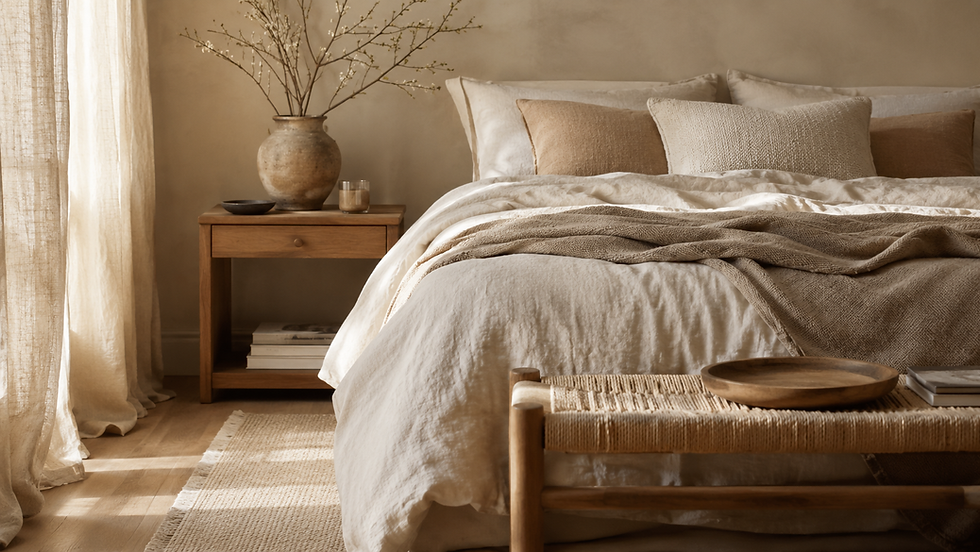

Seasonal changes are a good time to look at texture.
In cooler months, heavier fabrics, deeper tones, and layered materials often feel comforting. As the seasons shift, those same elements may start to feel dense or visually warm in a way that no longer fits the mood of the home.
Small texture swaps can make a noticeable difference. Linen, cotton, woven shades, lighter throws, natural wood, greenery, ceramic pieces, and softer rugs can all help a room feel more relaxed and breathable.
This does not mean replacing everything. It may be as simple as changing pillow covers, removing a heavy throw, swapping a lampshade, introducing a natural woven element, or styling a few branches in a vase.
The goal is not to decorate for a season in a literal way. The goal is to adjust the feeling of the space so it supports how you want to live in it right now.


A room rarely feels refreshed if it still functions poorly.
Sometimes, what feels like a style issue is actually a function issue. A living room may feel off because the seating arrangement does not support conversation. An entry may feel messy because there is no clear place for shoes, bags, or keys. A bedroom may feel unfinished because the lighting does not support both winding down and getting ready.
Before making aesthetic updates, consider where friction is showing up in the space.
Ask yourself:
What part of this room feels harder to use than it should?
Where does clutter naturally collect?
Is the layout supporting how we actually live?
Are there pieces in this room that look nice but do not serve the space well?
What would make this room feel easier on a daily basis?
A more functional space almost always feels more beautiful because it creates ease. When the room works better, you experience it differently.


It can be tempting to refresh a space by adding a few new pieces and hoping the room feels different. Sometimes that works, but often it creates the opposite effect: more things, more visual noise, and less clarity.
A thoughtful refresh starts with direction.
That direction does not have to be complicated. It may be a simple phrase, such as “calm and layered,” “lighter and more open,” “warm but edited,” or “family-friendly but elevated.” Having a direction helps you make better decisions. It gives you a filter for what stays, what goes, and what is worth adding.
Without that filter, it is easy to buy things that are individually beautiful but do not create the feeling you want as a whole.
This is one of the reasons we emphasize intention so much in our work. A home should feel collected, not pieced together out of urgency. Even small updates are more successful when they are connected to a larger vision.


One of the most important things to remember is that your home does not need to be solved in one weekend.
In fact, the most successful updates often happen in phases. Start with the spaces you use most. Pay attention to what feels heavy, cluttered, unfinished, or misaligned. Make the first layer of edits before deciding what needs to be purchased.
Sometimes, the first step is clearing a surface. Sometimes, it is reworking a room layout. Sometimes, it is replacing lighting, updating textiles, or finally addressing the corner that has never quite worked.
A home refresh can be quiet and practical. It can be thoughtful rather than dramatic. It can be less about transformation and more about bringing the home back into alignment with the life happening inside it.

If your home is starting to feel ready for a reset, here are a few approachable places to start:
Clear one visual plane. Choose a surface, wall, shelf, or corner and edit it fully. Removing visual clutter from one area can shift the feeling of an entire room.
Rework your lighting. Lighting has a major impact on how a space feels. Consider whether a room needs softer lamps, warmer bulbs, layered lighting, or better evening light.
Simplify your textiles. Pillows, throws, bedding, rugs, and window treatments can change the tone of a room quickly. Look for pieces that feel lighter, softer, and more aligned with the season.
Bring in something natural. Greenery, branches, natural fibers, wood, stone, and ceramic pieces can add warmth without making a space feel busy.
Create more breathing room. Not every wall, surface, or corner needs to be filled. Negative space is part of good design. It gives the eye somewhere to rest.
Address the daily friction. Look for the area that bothers you most often. The best refresh may be less about decor and more about solving a small, recurring problem.


A refreshed home should not feel like a showroom. It should feel like a more supportive version of your own space.
It should feel easier to move through. Calmer to wake up in. More comfortable to gather in. More reflective of who you are now, not simply who you were when the room first came together.
That is the difference between decorating and designing with intention.
At KMCC, we approach every project with that distinction in mind. Whether we are working on a full-service interior design project, a focused design session, or a commercial space, the goal is not just to make the space look better. The goal is to help it function better, feel better, and support the people who use it every day.
If you are craving a seasonal reset, start small. Edit first. Notice what feels heavy. Pay attention to what is no longer working. Then make thoughtful shifts that bring the space closer to how you want it to feel.
Needing a little help to get started?

Comments